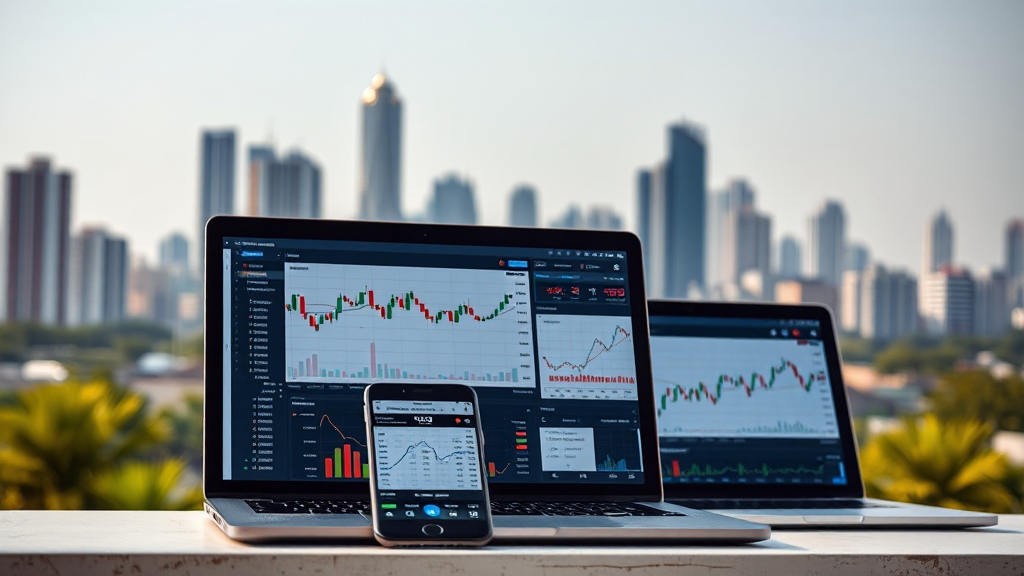
MCX DABBA TRADING: A Modern Approach to Commodity Markets in India
MCX DABBA TRADING: A Modern Approach to Commodity Markets in India
In the fast-evolving landscape of Indian financial markets, traders are constantly seeking efficient and flexible ways to participate in commodity trading. One such method that has gained significant attention is MCX DABBA TRADING. This approach combines the traditional appeal of commodity markets with the convenience of modern digital platforms, offering a unique trading experience. In this comprehensive guide, we will explore the nuances of MCX dabba trading, its benefits, risks, and how platforms like the DABBA TRADING ecosystem are reshaping the way traders interact with the Multi Commodity Exchange (MCX).
Commodity trading in India has always been a cornerstone of the economy, with MCX being the leading exchange for metals, energy, and agricultural products. However, traditional trading methods often involve high capital requirements, complex margin structures, and limited flexibility. Dabba trading, a term derived from the Hindi word for a small box or container, has evolved to represent a more agile and accessible form of trading. In the digital age, it has transformed into an online practice where traders can execute trades with minimal capital and enjoy faster execution. This article aims to provide a detailed analysis of MCX dabba trading, its operational mechanics, and its growing popularity among Indian traders.
Understanding MCX Dabba Trading
MCX dabba trading refers to the practice of trading commodity derivatives on the Multi Commodity Exchange through informal or semi-formal channels, often facilitated by digital platforms that offer a simplified interface. Unlike standard exchange-traded futures, dabba trading allows participants to speculate on price movements without the need for full margin deposits or strict regulatory compliance. This method is particularly appealing to retail traders who seek quick entry and exit points, as well as to those who prefer a more personalized trading experience.
The term “dabba” in this context does not imply a literal container but rather symbolizes a compact, contained environment where trades are executed swiftly. In the digital era, this has been translated into user-friendly apps and websites that provide real-time price feeds, instant order execution, and simplified profit/loss tracking. The DABBA TRADING ID system is a prime example, offering traders a unique identifier to access their trading dashboard, monitor positions, and manage funds seamlessly.
It is important to note that while dabba trading is popular, it operates in a gray area of financial regulation. The Securities and Exchange Board of India (SEBI) and the Forward Markets Commission (FMC) have historically cautioned against such practices, as they lack the transparency and investor protection of regulated exchanges. However, the rise of technology-driven platforms has brought a semblance of structure to this informal trading, with features like real-time analytics and secure payment gateways. For many traders, the allure lies in the simplicity and speed, making it an attractive alternative to conventional brokerage services.
How MCX Dabba Trading Works
The operational framework of MCX dabba trading is relatively straightforward, especially when facilitated by modern apps. Typically, a trader registers on a platform like the DABBA TRADING APP, which provides a dashboard displaying live MCX prices for commodities such as gold, silver, crude oil, and natural gas. The trader can select a commodity, choose a contract size (often smaller than standard MCX lots), and place a buy or sell order. The platform then matches the order with a counterparty, either from its own inventory or through a network of dealers, and executes the trade almost instantaneously.
One of the key features of dabba trading is the use of fixed spreads or commissions, rather than variable brokerage fees. This makes cost calculations simpler for traders, as they know upfront the charge per trade. Additionally, many platforms offer leverage, allowing traders to control a larger position with a smaller amount of capital. For instance, a trader might only need to deposit 5-10% of the contract value as margin, amplifying potential returns but also increasing risk. The DABBA TRADING SITE provides educational resources and tutorials to help new users understand these mechanics, ensuring they are well-informed before diving in.
Another aspect is the settlement process. In regulated exchanges, trades are settled through clearing houses, but in dabba trading, settlement is often done bilaterally between the trader and the platform. This can lead to faster payouts, but also introduces counterparty risk. Reputable platforms mitigate this by maintaining sufficient liquidity and using secure payment systems. It is crucial for traders to choose a platform with a proven track record and transparent policies to avoid potential disputes.
Benefits of MCX Dabba Trading
The growing popularity of MCX dabba trading can be attributed to several distinct advantages that appeal to modern traders. Firstly, accessibility is a major factor. Traditional commodity trading often requires a substantial initial investment, but dabba platforms allow entry with minimal capital, sometimes as low as a few thousand rupees. This democratizes trading, enabling individuals from diverse economic backgrounds to participate in the commodity markets.
Secondly, the speed of execution is unparalleled. In a fast-moving market like MCX, where prices can fluctuate within seconds, having a platform that offers instant order placement is invaluable. Dabba trading apps are designed to minimize latency, providing real-time updates and quick confirmations. This agility allows traders to capitalize on short-term price movements, a strategy that is difficult to implement with traditional brokerage services that may have slower execution times.
Thirdly, the simplicity of the user interface is a significant draw. Many traders are intimidated by complex trading software and jargon. Dabba trading platforms simplify the process with intuitive designs, clear charts, and straightforward order forms. This user-friendly approach reduces the learning curve, making it easier for beginners to start trading. Additionally, the flexibility to trade smaller lot sizes means that traders can experiment with different strategies without risking large sums of money, which is particularly beneficial for learning and testing the waters.
Risks and Regulatory Considerations
While the benefits are enticing, it is essential to acknowledge the risks associated with MCX dabba trading. The most prominent risk is the lack of regulatory oversight. Since these trades do not occur on recognized exchanges, they are not protected by the investor safeguards provided by SEBI. This means that in the event of a platform failure or fraudulent activity, traders may have limited recourse to recover their funds. It is imperative to conduct thorough due diligence on any dabba trading platform before committing capital.
Another risk is the potential for price manipulation. In an unregulated environment, there is a possibility that the platform or its dealers may manipulate prices to their advantage, leading to unfair losses for traders. Reputable platforms, however, strive to maintain transparency by aligning their prices with the official MCX rates and providing audit trails. The DABBA TRADING ecosystem, for instance, emphasizes real-time data integration to ensure that traders receive accurate market information.
Additionally, leverage can amplify losses as much as gains. A trader who uses high leverage may face margin calls or lose their entire investment if the market moves against them. It is crucial for traders to employ risk management techniques, such as setting stop-loss orders and limiting the size of positions. Many platforms offer risk management tools, but ultimately, the responsibility lies with the trader to trade responsibly and within their risk tolerance.
Choosing the Right MCX Dabba Trading Platform
Selecting a reliable platform is the most critical decision for anyone interested in MCX dabba trading. With the proliferation of apps and websites, it can be overwhelming to distinguish between legitimate services and potential scams. Here are some key factors to consider when evaluating a platform:
- Regulatory Compliance: While dabba trading is not regulated, some platforms operate in partnership with registered brokers or have a legal framework that offers a degree of accountability. Look for platforms that are transparent about their legal status and business model.
- Security Measures: Ensure the platform uses encryption and secure payment gateways to protect your financial information. Two-factor authentication and withdrawal limits are also signs of a security-conscious provider.
- Customer Support: A responsive customer support team is essential, especially for resolving issues related to trades, deposits, or withdrawals. Test their support channels before committing.
- User Reviews and Reputation: Search for independent reviews and testimonials from other traders. A platform with a long history and positive feedback is more likely to be trustworthy.
- Transparent Fee Structure: The platform should clearly state its commission rates, spreads, and any hidden charges. Avoid platforms that are vague about their costs.
The DABBA TRADING SITE is an example of a platform that aims to address these concerns by offering a user-friendly interface, robust security, and a transparent fee model. However, as with any financial decision, it is advisable to start with a small investment to test the platform’s reliability before scaling up.
Strategies for Success in MCX Dabba Trading
To succeed in MCX dabba trading, traders need to adopt a disciplined approach and develop effective strategies. One common approach is trend following, where traders analyze market momentum and enter positions in the direction of the prevailing trend. This can be done using technical indicators such as moving averages, RSI, and MACD, which are often integrated into trading apps.
Another strategy is range trading, where traders identify support and resistance levels and buy at the lower end and sell at the upper end. This requires patience and a good understanding of market dynamics. Since dabba trading allows for smaller lot sizes, traders can test these strategies with minimal risk, gradually refining their techniques.
Risk management is paramount. Successful traders never risk more than a small percentage of their capital on a single trade. They use stop-loss orders to limit potential losses and take-profit orders to secure gains. Additionally, maintaining a trading journal helps in analyzing past trades and identifying patterns that can inform future decisions.
Staying informed about global economic events and commodity-specific news is also vital. For instance, geopolitical tensions can affect crude oil prices, while monsoon forecasts can impact agricultural commodities. Platforms that provide news feeds and market analysis can be valuable resources for traders.
Future of MCX Dabba Trading
The future of MCX dabba trading is likely to be shaped by technological advancements and evolving regulatory landscapes. As blockchain and AI technologies mature, we may see more transparent and secure dabba trading systems. Smart contracts could automate settlement processes, reducing counterparty risk. AI-powered analytics could provide traders with predictive insights, enhancing their decision-making capabilities.
However, regulatory pressure may also increase. SEBI has been actively working to curb unregulated trading activities, and it is possible that dabba trading may be brought under a more formal regulatory framework in the future. This could legitimize the practice, offering traders the benefits of protection while maintaining the flexibility that makes it attractive. Until then, traders must navigate the current environment with caution, balancing the allure of high returns with the inherent risks.
Frequently Asked Questions (FAQ)
Is MCX dabba trading legal in India?
MCX dabba trading operates in a regulatory gray area. It is not conducted on recognized exchanges and lacks SEBI oversight, making it technically unregulated. While it is not explicitly illegal, it does not offer the same legal protections as regulated trading. Traders should be aware of the risks and consider consulting a financial advisor.
What is the minimum capital required for MCX dabba trading?
The minimum capital required varies by platform. Some platforms allow traders to start with as little as ₹5,000, while others may have higher thresholds. It is advisable to choose a platform that aligns with your budget and risk tolerance, and to start with a modest amount that you can afford to lose.
How do I withdraw profits from a dabba trading platform?
Withdrawal procedures differ among platforms. Typically, you can request a withdrawal through the app or website, and the funds are transferred to your linked bank account or digital wallet. Be sure to verify the platform’s withdrawal policy, including any fees or processing times, before you start trading.
Can I trade on MCX dabba trading using a mobile app?
Yes, most modern dabba trading platforms offer mobile apps for both Android and iOS. These apps provide real-time prices, charting tools, and one-tap trading, making it convenient to trade from anywhere. The DABBA TRADING SITE is designed to be mobile-friendly, ensuring a seamless experience on smartphones.
What are the common mistakes to avoid in MCX dabba trading?
Common mistakes include trading without a clear strategy, over-leveraging, ignoring risk management, and choosing unreliable platforms. To avoid these, always educate yourself, start small, use stop-loss orders, and thoroughly research any platform before investing.
In conclusion, MCX dabba trading represents a modern, accessible way for Indian traders to participate in commodity markets. With the right platform and a disciplined approach, it offers opportunities for profit, but it is not without risks. By staying informed and cautious, traders can navigate this exciting frontier and potentially reap the rewards.